How National Rainbow College Fund Helps Students Stay on Track—On Their Own Terms
May 4, 2026 | By NRCF Team
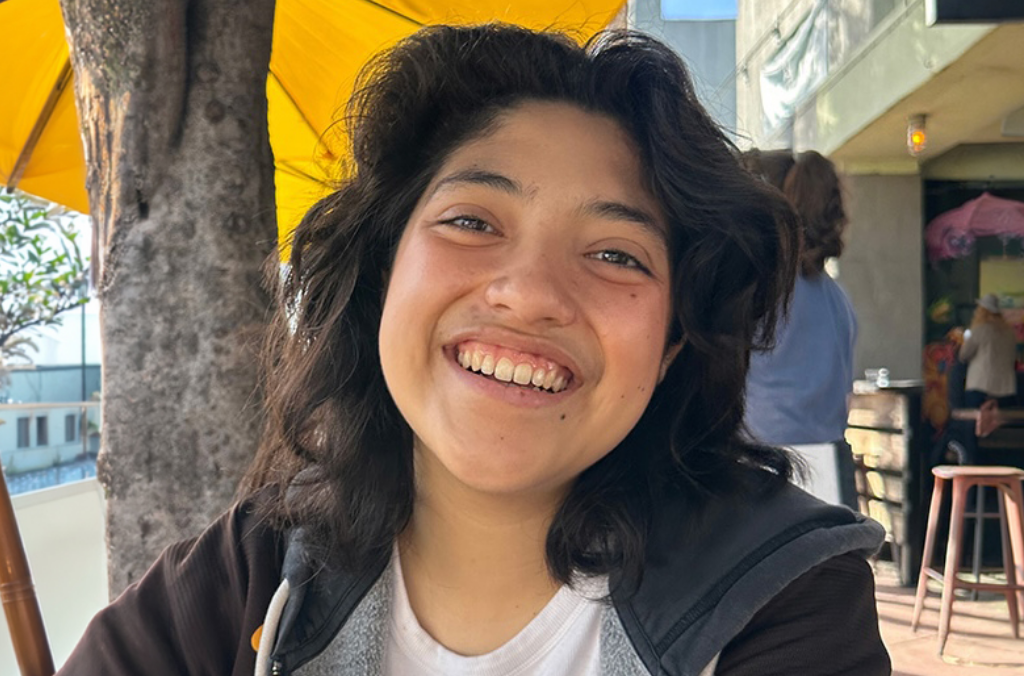
For many students, college is built on an invisible safety net: family support, stable housing and the confidence that someone will step in if something goes wrong.
There are many students who don’t have to think about staying in college. There are others who face the opposite—where staying enrolled comes down to one thing: stability.
When family support, housing or financial security are uncertain, even small disruptions can put a student’s education at risk. For LGBTQ+ students, that uncertainty can be even more complex, especially when being open about their identity is not always simple or without consequence.
National Rainbow College Fund (NRCF) exists to prevent those disruptions. Through a privacy-first scholarship model, the program helps students stay enrolled without requiring them to disclose personal information or navigate additional risk.
For Sam Rivera, that kind of stability made it possible to continue.
Sam is pursuing studies in law and public policy, with a focus on long term community impact. After beginning at UCLA, Sam made the decision to transfer closer to home in San Diego County, an intentional step to reset, refocus and continue her education at a pace that felt sustainable.
Like many students, Sam experienced academic pressure and burnout coming out of high school. Adjusting her path wasn’t a setback, it was a way to stay enrolled and move forward with greater clarity.
“I think I’m doing school for me now,” Sam shared. “I’m excited to take it at my own pace and really focus on what matters.”
That kind of recalibration is more common than many people realize. When students are navigating pressure—whether academic, financial or personal—having the flexibility to continue their education without interruption is critical.
Sam’s path to this point was shaped by constant movement and responsibility at a young age. Growing up between Northern and Southern California—and often taking on a leadership role as the oldest of four siblings—stability wasn’t always guaranteed. School became a consistent space—one where structure, community and opportunity were more reliable.
That foundation carried forward into college, but the transition still came with challenges. Like many students, Sam had to make decisions not just about academics, but about sustainability—how to continue her education in a way that supports long-term success.
This is where programs like NRCF matter most.
By addressing financial gaps and reducing the pressure that can come with traditional scholarship expectations, NRCF helps ensure students can stay enrolled, even during periods of transition or uncertainty.
Equally important is the sense of connection that comes from being part of a broader student community. Through involvement with the NRCF Student Advisory Council, Sam is helping shape how the program supports future students, particularly those navigating the college transition themselves.
“I’ve always found community in school,” Sam said. “Being part of something where I can help create that for someone else is really meaningful.”
That focus on continuity—staying enrolled, staying connected and staying on track—is central to NRCF’s mission. The program is designed to ensure students can move forward with their education without being asked to take on additional risk or share more than they are comfortable with.
Sam hopes to contribute to that mission by helping expand mentorship opportunities for high school seniors navigating the college application process, as well as creating more spaces for connection and support.
“Having someone who understands what that stage feels like can make a big difference,” Sam shared.
That perspective reflects a broader truth: when students are supported early—before instability becomes crisis—they are more likely to continue their education and build long-term stability.
That’s the role National Rainbow College Fund is designed to play.
Your support makes it possible for students like Sam to stay enrolled, adapt when needed and continue building toward their future, without being asked to take on additional risk to access that support.