Between Two Worlds
November 24, 2025 | By NRCF Team
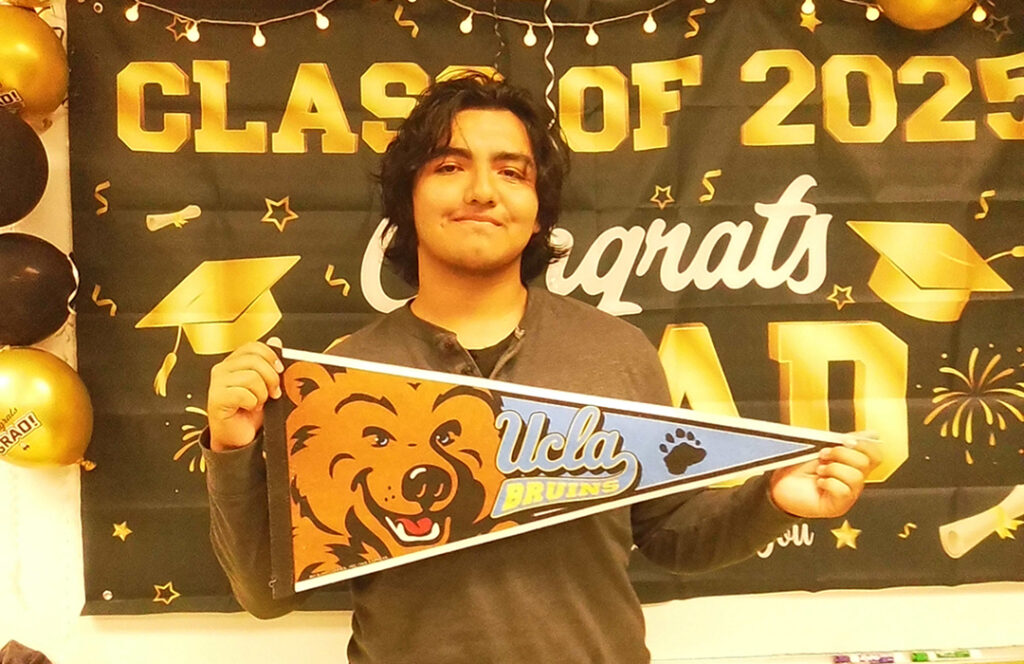
Growing up just 25 minutes from the Mexican border with his mother in La Mesa, California, Luis lived a life split between two countries and two very different realities. Three days a week, he crossed into Mexico to stay with his father. While geography divided his time, it was acceptance—or the lack thereof —that defined his childhood.
From an early age, Luis knew he was bisexual. In California with his mother, that truth was embraced. But in Mexico with his father, it became a source of profound pain. “I felt like I was going there just sitting because I was his son. He wasn’t emotionally present,” Luis reflected.
The rejection was rooted in what Luis describes as machismo culture—rooted in expectations that men should be strong, fierce and forceful. “When a son comes out, it affects the father most of all – even though not all gay men act feminine,” he explains.
He remembers being a little boy, painting his nails black with a Sharpie while playing with friends. His father’s response was immediate and cutting: “That’s what a girl does. I didn’t have a daughter. I had a son. Don’t act like a girl.”
Now a college student, Luis no longer speaks to his father. But those years of rejection became something else — a calling. “I want to advocate for people who are forced to live with parents who don’t accept them. Every day of every year,” Luis says with quiet determination.
When School Became Home
In eighth grade, Luis’s world shifted when his mother was diagnosed with cancer. While he cared for his mother, his older brother was working two jobs, and life became extremely difficult for his family. “Being home was hard,” Luis remembers. “School was happy and filled with supportive friends, teachers and counselors.”
His mother worked as an accounting clerk at the school district—a steady job, but not one that left room for college savings. When Luis asked if they had set aside money for his education, his mother’s answer was that unfortunately, he would have to figure it out. There simply hadn’t been enough income to save for college.
School remained his refuge and his inspiration. His homeroom teacher for all four years of high school became a lifeline. When Luis got into UCLA — his dream school — she cried tears of joy with him. “Support for other students is what I hope to be, too,” Luis says, his voice full of gratitude.
Making the Impossible Possible
Luis is pursuing his dream at UCLA, majoring in sociology and cognitive science with intentions of becoming a social science teacher. His mother beat cancer and remains his biggest support. Getting to UCLA required more than good grades and determination. Luis applied to scholarships to be able to not only get into college, but to be able to afford to attend and be the first in his family to graduate.
“Scholarships make the impossible possible,” Luis says emphatically. “I didn’t have any money outside of scholarships for school.” The National Rainbow College Fund scholarship was among those that made Luis’s first year at UCLA fully funded. Without it, his path would have looked drastically different. “I would have had to go to community college or give up the dream of being a teacher and start working,” Luis explains. “National Rainbow College Fund helps me follow my dreams.”
For Luis, becoming a teacher isn’t just about a career — it’s about creating the kind of safe, supportive environment that saved him during his darkest moments. “I saw students not taking advantage of every opportunity, and I wanted to be sure that I did,” he says. “I want to make my family proud.”
His teachers and his mother’s strength through cancer inspired him. His own experiences living between acceptance and rejection, between two countries and two identities, empowered him. Now, with support from donors who believe in him, Luis is becoming the kind of teacher he relied upon — one who sees students for who they truly are and supports them every step of the way.
When donors contribute to National Rainbow College Fund, they don’t provide solely financial aid—they provide hope, possibility, and the freedom for students like Luis to pursue their dreams without having to choose between authenticity and opportunity. Your support makes it possible for LGBTQ+ students to focus on their education, build their futures and give back.